
Last updated October 15, 2026








Free written scope consultation - allowances, timeline, and change-order rules on paper before a single trade is scheduled
Seasonal Construction Care for Thousand Oaks: Year-Round Homeowner’s Guide
Thousand Oaks doesn’t punish homes the way other climates do. No freeze-thaw cycles heaving foundations, no hurricane-force winds stripping siding, no months of snow sitting on roof decks. That’s exactly why the damage here surprises people. UV breaks down caulk and exterior paint slowly, oak roots work into hairline foundation cracks over years, and stucco absorbs moisture through microfractures that never show on the inside wall, until one day they do. This guide maps construction care to the four risk windows that actually exist in the Conejo Valley: fire season, post-fire-season wind and rain, dry-heat summer stress, and the brief freeze-risk nights. Match your maintenance rhythm to those windows and you’ll catch the quiet damage before it becomes a five-figure repair. We’ve spent two decades in Thousand Oaks watching how these patterns play out, and the sequence below is the one we’d give our own neighbors.
Quick Answer
The most important seasonal construction care in Thousand Oaks is not a spring cleaning list, it’s a four-window rhythm: June through September for ember-resistant vents, defensible deck clearance, and UV surface inspections; October through November for Santa Ana wind prep, including roof fastener and fence post checks; December through February for drainage, downspout extensions, and subfloor ventilation during wet years; and March through May for exterior painting, deck refinishing, and caulk replacement when temperature and dew point actually allow proper adhesion. Each window catches failures from the previous season before they compound.
Styles & brands we work with







Table of Contents
- June – September: Fire Season Prep and the Deferred Maintenance You’ll Catch Along the Way
- October – November: The Santa Ana Wind Window – What to Inspect Before the First Event
- December – February: Drainage, Downspout Extensions, and Subfloor Ventilation for the Conejo Valley’s Wet Years
- March – May: The Real Exterior Painting, Deck Refinishing, and Caulk Replacement Window
- Year-Round: The Three UV-Sensitive Construction Components and Their Actual Inspection Intervals
- Common Mistakes to Avoid
- When to Call a Professional
- Frequently Asked Questions
June – September: Fire Season Prep and the Deferred Maintenance You’ll Catch Along the Way
Fire season in Thousand Oaks is not a possibility, it’s a calendar event. The National Weather Service issues Red Flag Warnings here most years between late June and early October, and the Conejo Valley’s chaparral-covered hillsides mean ember intrusion is the primary risk to homes, not direct flame contact. Most homeowners focus on clearing brush, which matters, but the construction details are where homes actually fail. Embers don’t need a direct path. They blow into attics through undereave vents, settle in the gap between a wood deck and the house, and smolder against rotted fascia boards.
- Check every exterior vent for ember resistance. Attic vents, foundation vents, and crawl space vents should have 1/8-inch or finer metal mesh screening. The standard 1/4-inch mesh that came with your home lets embers through. If you can see daylight through the mesh pattern from three feet away, it’s too coarse. Replacement vent covers with welded metal screens cost $15-$45 per vent and take about ten minutes each. It’s the single highest-value fire prep item on any Thousand Oaks home built before 2015.
- Clear the deck-to-house junction. Walk out and look at the gap where your deck boards meet the exterior wall. In Thousand Oaks, that junction collects oak leaves, eucalyptus bark, and fine duff all year. By August it’s tinder. Use a putty knife or a thin scraper to pull out everything lodged in that seam, then bag it. Do this before fire season, not during your spring cleaning.
- Inspect exterior surfaces while you’re clearing. This is the part homeowners skip: fire prep is also your best chance to catch deferred maintenance. While you’re clearing the deck gap, look at the siding above it. Cracked stucco, peeling paint, and separated caulk are all ember catch points. A cracked stucco seam doesn’t just look bad, it gives an ember a place to sit and smolder against the weather barrier underneath. More on Home Remodeling in Thousand Oaks when deferred exterior work turns into a full project.
- Clean gutters before the first Red Flag Warning, not after. Dry eucalyptus leaves in a gutter are an ember magnet. A single ember lands in a leaf-filled gutter and you have a roof fire that takes the whole structure. In Thousand Oaks, gutter cleaning should happen in May or early June, then again in late September as the real fire risk peaks.
We’ve inspected homes in Newbury Park and the Lynn Ranch area where the fire prep was pristine, brush clearance done to code, and the undereave vents were still original 1/4-inch mesh from 1987. The homeowner did the visible work and missed the structural one. That’s the pattern.
October – November: The Santa Ana Wind Window – What to Inspect Before the First Event
Santa Ana winds in Thousand Oaks are the most underrated structural stress on homes here. They don’t produce hurricane damage photos, so homeowners don’t treat them as a construction event. But a 60-mile-per-hour gust hitting a roof deck at the wrong angle does the same thing to fasteners and flashing that a Category 1 storm does in Florida: it works them loose gradually. The failure shows up later, during the first real rain, when a lifted shingle edge or a backed-out roofing nail that looked fine in October becomes a leak in January.
- Check roofing fasteners and edge flashing in late September. Walk the perimeter of your home and look at the roof edges with binoculars. You’re looking for lifted shingle tabs, exposed nail heads, and any metal edge flashing that’s pulled away from the fascia. A loose edge flashing makes a flapping noise in wind, which is actually your warning sign. If you hear flapping during a Santa Ana event, mark the side of the house and inspect it the next morning. That flashing is now a water entry point.
- Test fence post integrity. Wood fence posts in Thousand Oaks rot at the soil line, not the top. During a Santa Ana event, a rotted post fails at the base and takes two or three sections of fence with it. To check, push firmly on each post at chest height. A solid post doesn’t move. If it flexes more than a quarter inch, it’s compromised. Dig down two inches at the soil line; if the wood is soft or you can push a screwdriver into it, the post needs replacement before the wind season, not after.
- Secure or store anything stored against the house. This sounds obvious, but the specific Thousand Oaks issue is yard equipment, potted plants, and outdoor furniture placed against the side of the home. A 50-mph gust turns a ceramic planter into a projectile that cracks stucco or breaks a window. Move anything heavier than a basketball away from the house in October, or anchor it.
- Inspect window and door weatherstripping for wind-driven dust. Santa Anas carry fine dust and ash. If your weatherstripping is worn, that dust gets forced into the house through gaps you never noticed. Run your hand around the perimeter of closed windows and exterior doors on a windy day. You’ll feel the air movement at gaps. Weatherstripping replacement is a $50-$200 job that also cuts your cooling bill in summer.
Mason Remodeling Co provides General Contractor in Thousand Oaks services for these exact seasonal repairs. One thing we tell clients: don’t wait until a Santa Ana event is forecast to check your roof. The first event of the season usually arrives with about 48 hours of notice, and every contractor in the Conejo Valley is booked solid during that window.
December – February: Drainage, Downspout Extensions, and Subfloor Ventilation for the Conejo Valley’s Wet Years
The Conejo Valley swings between drought years and wet years. When the wet year comes, it drops 15 to 20 inches of rain in three months, and every drainage weakness you ignored during the dry years becomes a foundation or subfloor problem. Thousand Oaks homes built on hillside lots, especially in areas like Wildwood or near the Arroyo Conejo drainage, face specific risks: surface water flowing across the property during heavy rain and saturated soil pressing against foundation walls.
- Extend every downspout at least four feet from the foundation. The standard downspout elbow dumps water at the base of the wall. That’s the single most common drainage failure we see in Thousand Oaks. A four-foot downspout extension is a $12-$25 plastic part from any hardware store and takes five minutes to install. It moves roof runoff away from the foundation before it saturates the soil and finds its way into the crawl space or basement. If you do one item on this list, do this one.
- Check crawl space and subfloor ventilation. In a wet year, moisture in the crawl space condenses on the subfloor sheathing from below. Over the course of a single wet season, that moisture leads to mold, then to soft spots in the subfloor that you won’t notice until a floor tile pops or a floorboard flexes. The fix is ventilation: foundation vents should be open and unblocked on all four sides of the home. If your home has a vapor barrier on the crawl space floor, check that it’s continuous and not torn. A torn vapor barrier in a wet year is an invitation for mold growth that costs $3,000 to $8,000 to remediate.
- Inspect the soil grading around the house. The ground next to your foundation should slope away from the house at least six inches over the first ten feet. In Thousand Oaks, years of landscape mulch and planting beds fill in and reverse that slope. Get down at ground level and look: if you see water pooling against the foundation during a rain event, you need to regrade or install a surface drain. Regrading a small section is a weekend job. Fixing foundation damage from years of ponding water is a $10,000 to $40,000 project.
Mason Remodeling’s Bathroom Remodeling in Thousand Oaks projects often start because of moisture issues that began as drainage problems. A bathroom subfloor that’s rotted from crawl space moisture is a bathroom remodel you didn’t plan for.
March – May: The Real Exterior Painting, Deck Refinishing, and Caulk Replacement Window
Spring in the Conejo Valley is the sweet spot for exterior finish work, but not because it’s “painting season” on some generic calendar. There’s a material science reason. Exterior paints and sealants need surface temperatures between 50°F and 85°F and a dew point separation of at least 5 degrees between the surface and the air. In Thousand Oaks, March through May is when those conditions hold reliably, day after day, without the June through September heat that causes paint to flash-dry and lose adhesion, and without the December through February moisture that traps water under the paint film. If you’ve ever painted an exterior in August and watched it peel by the following spring, that’s why.
- Replace exterior caulk in March or April. Caulk is the cheapest exterior defense you have and the most commonly neglected. Walk the exterior and inspect every joint: window and door frames, siding transitions, utility penetrations, and the joint where trim meets stucco. Cracked or separated caulk lets water in behind the finish. A tube of quality exterior caulk costs $8-$12, and a full home takes 6-12 tubes and about an afternoon. The temperature window matters here: caulk applied below 40°F or above 90°F won’t cure properly, and all of Thousand Oaks’ winter and summer days fall outside the band.
- Refinish decks in May, not in July. A deck in Thousand Oaks takes relentless UV from June through September. If you apply stain or sealer in July, it’s curing in 95°F heat on a surface that’s 140°F, which means it dries too fast and doesn’t penetrate. A May refinish lets the coating cure slowly and properly before the UV stress season begins. Do the light sanding and cleaning in April, then apply the finish in May.
- Schedule exterior painting for late March through May. If your home’s exterior paint is chalky to the touch, fading, or showing bare wood or stucco through the finish, the spring window is when you get a repaint that lasts. Paint applied in the correct temperature window in Thousand Oaks lasts 7 to 12 years on stucco and 5 to 7 years on wood trim. Paint applied in the summer heat window lasts 3 to 5 years before it starts peeling.
The builders at Mason Remodeling Co Thousand Oaks home have seen too many good paint jobs fail because they were applied in the wrong window. A few weeks of patience in the spring saves thousands in rework.
Year-Round: The Three UV-Sensitive Construction Components and Their Actual Inspection Intervals
Thousand Oaks gets about 280 to 300 days of sunshine per year. That’s the real construction stressor here, and it’s invisible because it works slowly. UV radiation doesn’t create dramatic failures. It degrades polymers, embrittles plastics, and breaks down binders until one day the material just lets go. Three components in a Thousand Oaks home are most vulnerable, and each has an inspection interval that actually matches its degradation rate.
1. Exterior caulk and sealant beads – inspect every April and October. UV breaks down the plasticizers in caulk within 3 to 5 years on sun-exposed southern and western walls. North-facing walls can go 7 to 10 years. You can’t inspect once a year and catch the south wall’s failure. Inspect every April to catch winter damage and every October to catch summer UV damage before the wet season.
2. Roof boots and pipe flashing – inspect every two years. The rubber boot around plumbing vent pipes on your roof degrades from UV from the top, and the failure shows as cracking at the base of the boot, not at the top. You won’t see it from the ground. Every two years, get a look at your roof boots, either with binoculars from a ladder or by having a roofer inspect. A cracked boot is a $30 part and a 30-minute fix. The leak it causes, accumulated over two or three winters, is a $2,000 to $5,000 ceiling repair.
3. PVC and plastic exterior components – inspect every three years. This includes the plastic covers on exterior outlets, the weatherhead where your electrical service enters the house, and the plastic trim pieces on windows and doors. All of these embrittle in the Thousand Oaks sun. The failure mode is catastrophic: a weatherhead that cracks lets water follow the service cable down into the breaker panel, and now you have an electrical repair, not a plastic replacement.
These aren’t the inspections homeowners think about, and they’re not on any generic seasonal maintenance checklist. They are, however, the inspections that prevent the calls we get from Thousand Oaks homeowners who suddenly have water where it shouldn’t be. If you’d rather not do these yourself, a general contractor in Thousand Oaks can include them as part of a seasonal check.
Common Mistakes to Avoid
- Following a spring/fall calendar instead of the Conejo Valley risk windows. The generic advice to “clean gutters in spring and fall” isn’t wrong, but it misses the sequencing: in Thousand Oaks, gutters need to be ember-clear by June and debris-clear by November. Timing matters more than frequency.
- Assuming “mild climate” means “low maintenance.” The damage here accumulates without dramatic events. A homeowner who skips two years of caulk inspection doesn’t see a failure; they see a water stain on an interior wall three years later and don’t connect it to the cracked bead they never checked.
- Using standard 1/4-inch vent mesh because “it’s always been there.” Grandfathered vent screens are the most common ember entry point on Thousand Oaks homes. Code updates aren’t retrospective, but fire doesn’t care what code year your home was built under.
- Waiting until the first Santa Ana to check roof fasteners. By the time the wind is blowing, the inspection window is closed and you’re just hoping. The inspection has to happen before the event, in the calm weeks of late September and early October.
- Ignoring the subfloor from below. Homeowners check the interior floor surface, but subfloor damage starts in the crawl space. If you never look under the house, you’ll only see the result after it’s already a repair.
- Painting or staining exteriors in summer “because it’s dry.” Dry heat ruins paint adhesion. The correct window in Thousand Oaks is spring, and that’s a hard material science constraint, not a preference.
- Not extending downspouts because “the ground slopes away.” Most Thousand Oaks homes were graded correctly at construction and have since lost that grade to landscaping and settling. The $15 downspout extension fixes what the lost grade doesn’t.
When to Call a Professional
Most of the seasonal tasks in this guide are doable for a handy homeowner: extending downspouts, replacing vent covers, clearing the deck junction, checking caulk. But some situations need a trained eye and the right equipment. If you see roof flashing that’s pulled away and can’t determine whether the underlayment is exposed, call instead of climbing. If a fence post flexes at the base and you discover the rot extends below the concrete footing, that’s a post replacement with structural implications. If you have interior water stains, soft subfloor spots, or a mildew smell that persists after drainage fixes, the problem is behind the surface and you need a professional assessment before it becomes a larger repair. Mason Remodeling Co Thousand Oaks offers free estimates in Thousand Oaks and can assess seasonal damage before it compounds. Call (805) 309-3386.
Frequently Asked Questions
DIY seasonal maintenance, including gutter cleaning supplies, downspout extensions, ember-resistant vent covers, and caulk replacement, typically costs $200 to $500 per year for materials; for a detailed breakdown of what drives these numbers, see our Construction Cost Breakdown: The Thousand Oaks Homeowner’s Reference for 2026. Professional seasonal inspections and repairs in Thousand Oaks run $300 to $800 per year for basic items like gutter cleaning and caulk replacement, while larger repairs such as fencing, drainage fixes, or subfloor remediation range from $1,500 to $40,000 depending on scope. Call (805) 309-3386 for a free estimate on any seasonal repair in Thousand Oaks.
Caulk should be replaced in Thousand Oaks every 3 to 5 years on southern and western exposures and every 7 to 10 years on northern exposures, with inspections every April and October to catch failures before the wet season. The spring window between March and May offers the temperature and dew point conditions that allow caulk to cure properly.
Yes. Embers are the primary fire threat to Thousand Oaks homes, and ember-resistant vents with 1/8-inch metal mesh are the single most effective fire preparation item for any home with attic or crawl space vents. Homes built before 2015 typically have 1/4-inch mesh that allows embers through, and replacement is a $15-$45 per vent DIY task. Call (805) 309-3386 if you’d like a free estimate on vent replacement.
Push firmly on each post at chest height. If it flexes more than a quarter inch, the post is compromised at the soil line. Dig down two inches at the base and test the wood with a screwdriver; soft wood means rot and the post needs replacement before the October-November wind season.
Start with the current season’s risk window. If it’s June through September, do fire season prep: replace vent covers, clear the deck-to-house gap, and inspect exterior surfaces. If it’s October or November, inspect roof fasteners and fence posts. If it’s December through February, extend downspouts and check crawl space ventilation. If it’s March through May, replace caulk and schedule exterior paint. Then move into the next window.
No. Seasonal maintenance catches the failures that are visible or early-stage, but some issues, like foundation movement from root intrusion or hidden subfloor moisture, require professional inspection and remediation. Before starting major work, review Construction Permits, Codes & Inspections in CA: What You Need to Know. The right pattern is seasonal checks plus a professional assessment when you see signs of water, movement, or persistent odor. Mason Remodeling Co Thousand Oaks offers free estimates for any scope of work. Call (805) 309-3386.
The Bottom Line

Thousand Oaks homes fail quietly. The mild climate means there’s no storm to blame, no freeze event to point to, no dramatic moment that marks the beginning of the damage. UV degrades materials on a schedule, oak roots work their way into foundations over years, and a Santa Ana event finds the loose fastener you never checked. The homes that last here are the ones whose owners match their maintenance rhythm to the four risk windows that actually exist in this climate. Do the fire season prep in summer, the wind prep in fall, the drainage work in winter, and the paint and caulk work in spring. The sequence is the strategy. If you’d rather have a professional handle any of it, call Mason Remodeling Co Thousand Oaks at (805) 309-3386 for a free estimate.
Written by Isaac Pruett, Owner at Mason Remodeling Co Thousand Oaks, serving Thousand Oaks since 2004.
See the difference
 Before
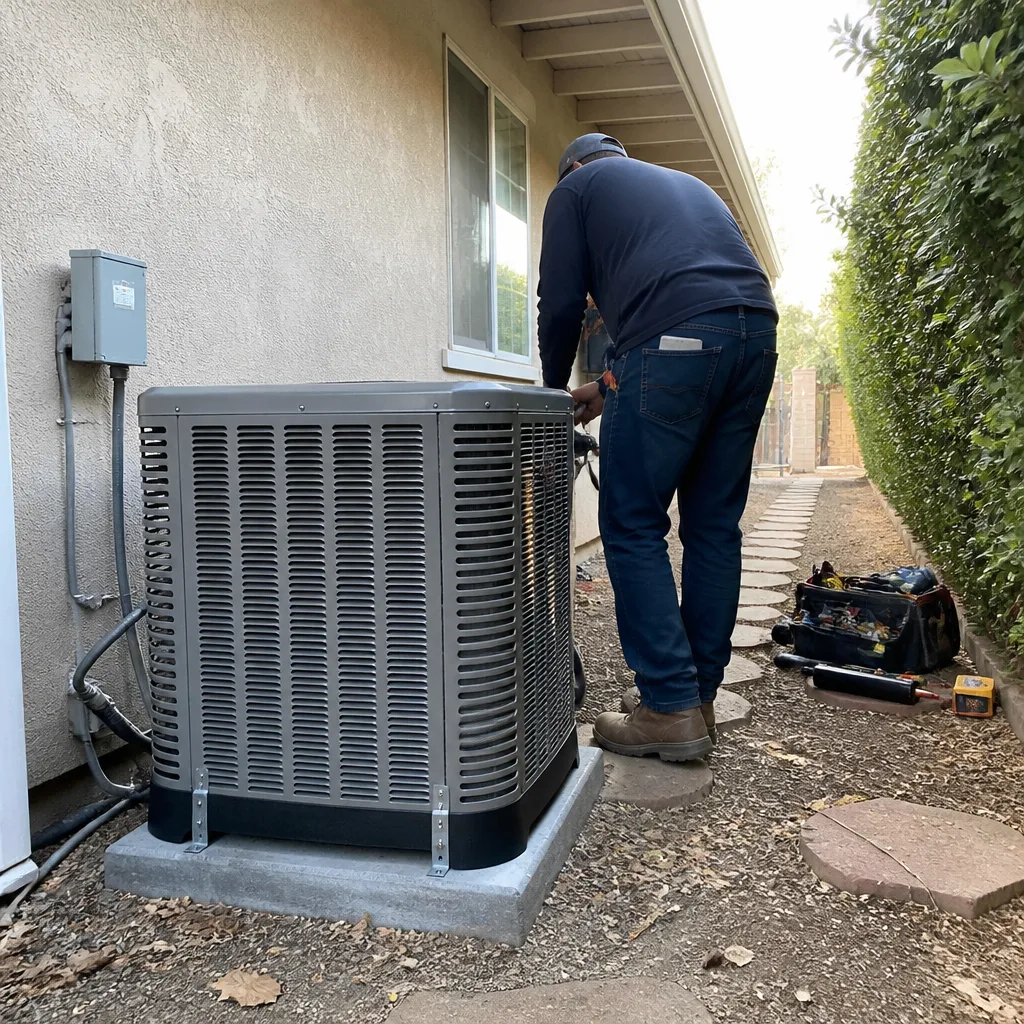
 After
After Before
 After
After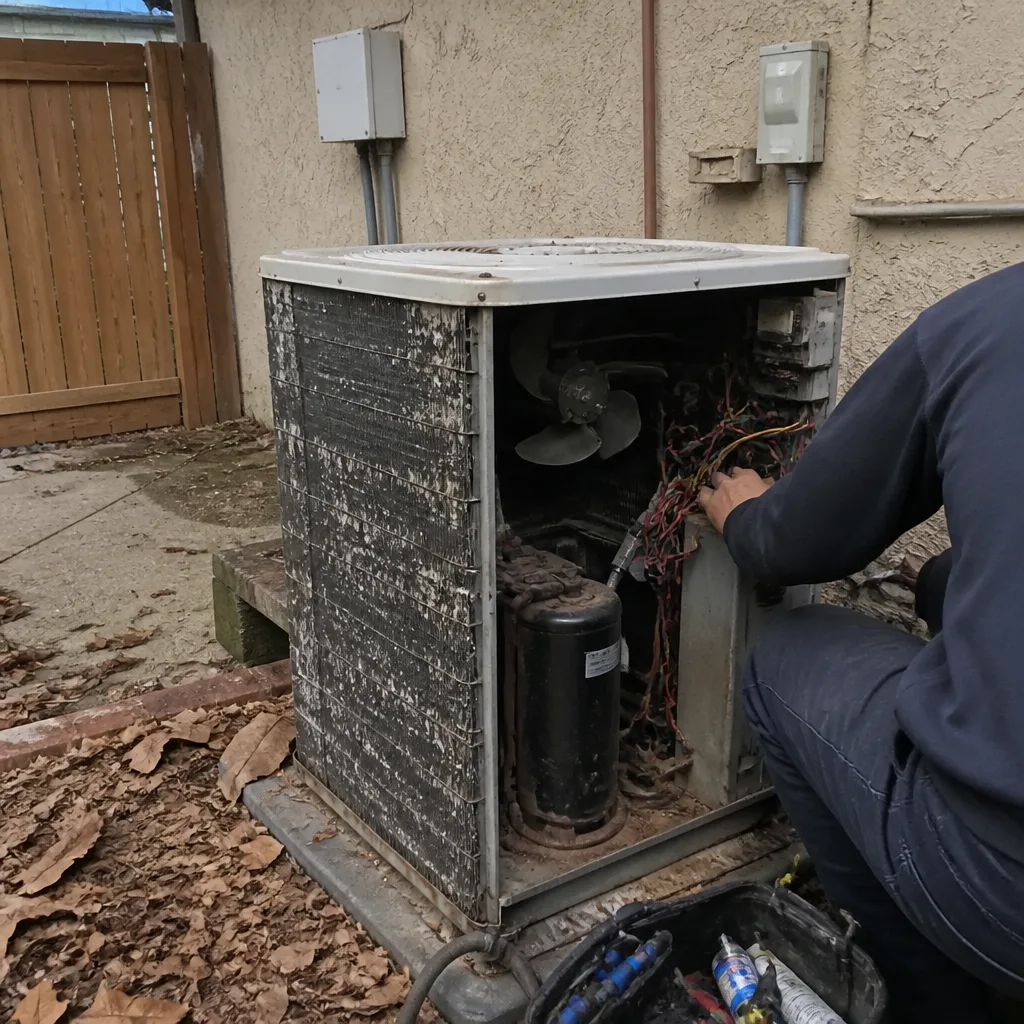 Before
 After
After