





Free written scope consultation - allowances, timeline, and change-order rules on paper before a single trade is scheduled
CGI Roofing: The Thousand Oaks Owner’s Guide
If you have a CGI roof and a failed or failing part, replacing it correctly in Thousand Oaks typically costs between $400 and $1,800 installed, depending on whether it’s a flashing repair, a few cracked tiles, or an underlayment section. We stock common CGI-compatible fasteners, flashing, sealants, and ridge components on our trucks, and for most single-part failures we can complete the swap the same day we’re on your roof. Most Thousand Oaks homeowners discover the problem the hard way: a drip in the garage after a Santa Ana wind event, a tile they find in the planter after a gust, or a rust line staining the fascia below a flashing joint.
CGI, or Cámara Gestora de Infraestructura, builds roofing components and systems widely used across Southern California, and here in Thousand Oaks the specific failures we see most are wind-lifted ridge caps, cracked tile from impact or thermal cycling, and flashing that’s separated at the transition where a tile roof meets a flat section or a chimney. The good news is that most single-part failures don’t require a full roof replacement. The catch is that CGI parts are not universal, and grabbing whatever looks close at a big-box store is how a $600 repair turns into a $3,000 water damage claim a year later.
Key Takeaways
- Typical CGI roofing part replacement in Thousand Oaks: $400 – $1,800 installed, depending on the component and roof accessibility.
- We stock common CGI-compatible parts on the truck: flashing, fasteners, sealants, ridge caps, and tile in the most common profiles used across Ventura County.
- We’re an independent service provider – not affiliated with CGI – which means we can recommend the right part honestly, whether that’s OEM or a quality aftermarket equivalent.
- Written price before work starts. You’ll know the exact number before a single tool comes off the truck.
Which CGI Models This Applies To

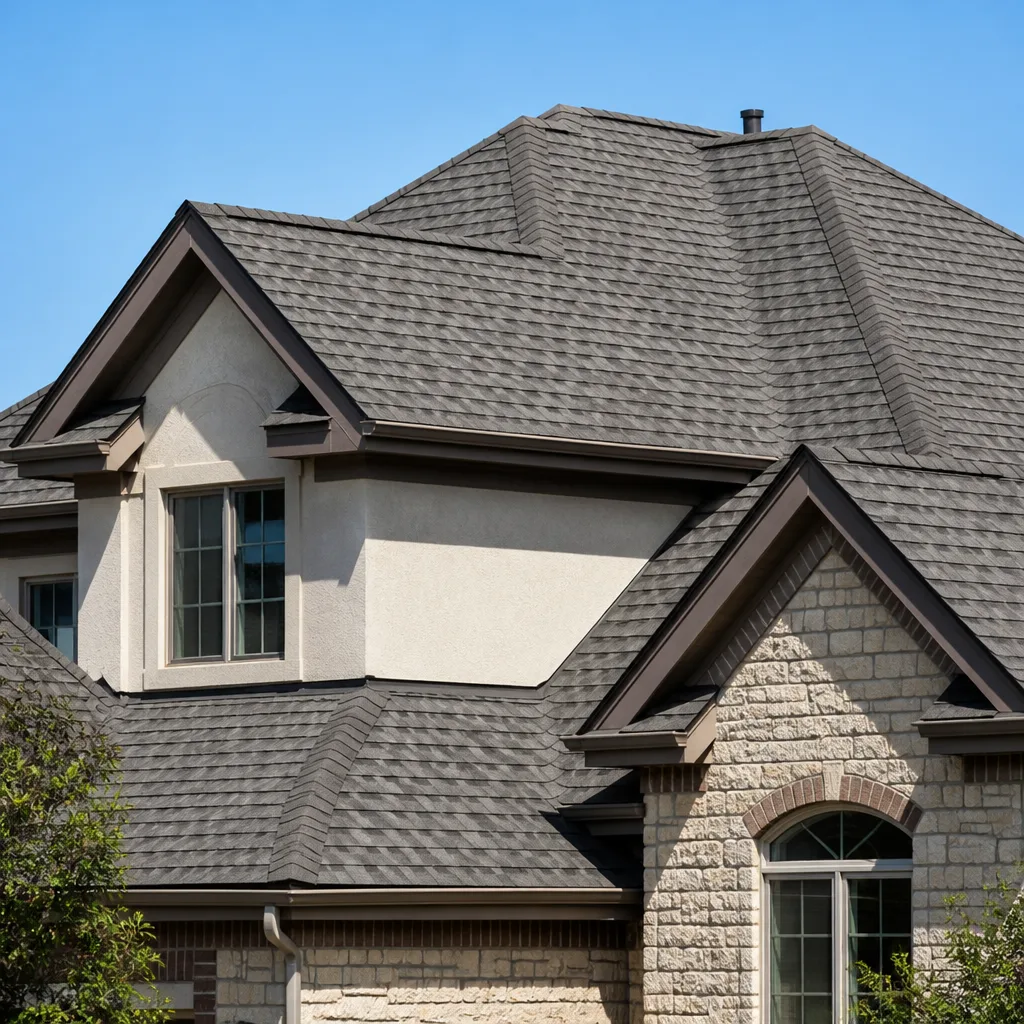
CGI’s roofing line includes concrete tile profiles, clay tile, and the flashing and ridge systems that go with them. The most common CGI-compatible profiles we work on in Thousand Oaks include low-profile and high-profile S-tile, flat shake, and mission-style barrel tile. If your roof was installed in the last 20 to 25 years by a tract builder in neighborhoods like Wildwood, Newbury Park, or the Conejo Valley foothills, there’s a solid chance it’s a CGI or CGI-spec-compatible tile system.
To identify the right replacement part, check the underside of a loose tile. CGI tiles typically carry a stamped code on the back surface, often a two or three letter series identifier followed by a production date code. If the stamp is worn or missing, measure the tile’s exposure width and the depth of the interlocking channel, because CGI’s S-tile channels are slightly deeper than some competing profiles, and a tile that looks identical from the ground can lock incorrectly if the channel depth is off by even a quarter inch. For flashing, what matters is the metal gauge and the profile of the turn-up edge. CGI flashing is designed to sit under the tile with a taller kick than generic flashing, and we see a lot of “quick fix” jobs around Thousand Oaks where someone used generic Z-flashing and water found its way under the tile within two seasons. The OEM-versus-aftermarket call usually comes down to this: for visible tile, match OEM or any profile-compatible tile with the same color blend. For flashing and underlayment upgrades, a quality aftermarket product often performs better than the original, especially on older builds where the original flashing was a thinner gauge.
Styles & brands we work with


Signs Your CGI Roofing Is Failing
- Water staining on the underside of your eaves or in the garage ceiling: In Thousand Oaks, this usually traces back to a failed flashing joint at a valley, chimney, or wall transition. The storm that exposed it was probably the first rain after a long dry stretch, which is exactly when small gaps turn into active leaks.
- Loose or displaced tiles after a wind event: Santa Ana winds don’t need to reach the 70 mph mark we saw in recent seasons to lift a tile whose fastener has rusted through. One tile out of place on a CGI system means the underlayment below it is now the only thing keeping your drywall dry.
- Rust streaks running down from a flashing line: That rust means the galvanized or aluminum flashing has reached the end of its corrosion resistance. In Thousand Oaks’s coastal-influenced air, flashing on the south-facing slope tends to age faster than the rest of the roof, and a rust line is the visible warning that the metal is thinning.
- Granule or tile-chip accumulation in your gutters: Concrete and clay tile don’t shed granules like asphalt, so if you’re seeing sandy material or small tile fragments in the gutter, you have either freeze-thaw spalling or impact cracking, and both mean water is finding new paths.
- Daylight visible from inside the attic through the roof deck: If you can see light through a gap at the ridge or a cracked tile, you’re seeing a direct water entry point. By the time it’s visible from the attic, the underlayment in that section has usually already been compromised.
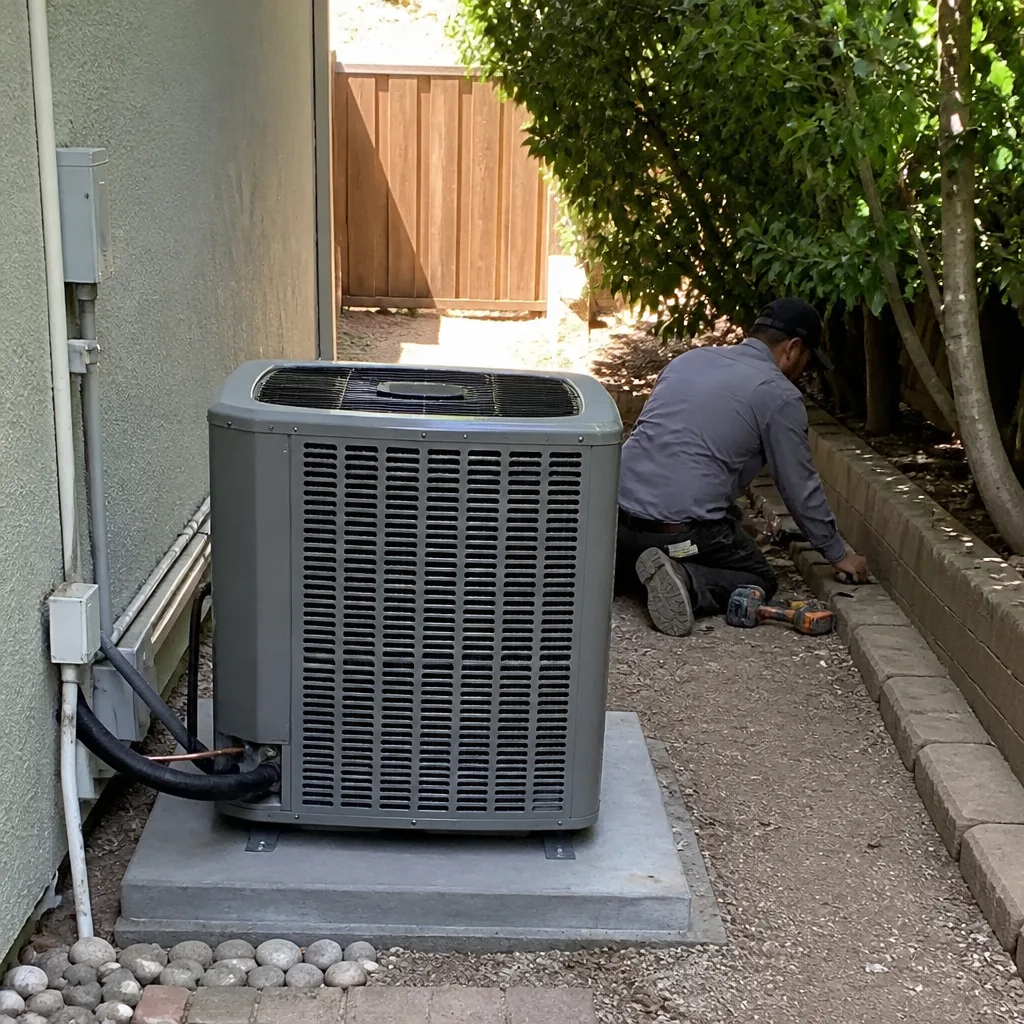
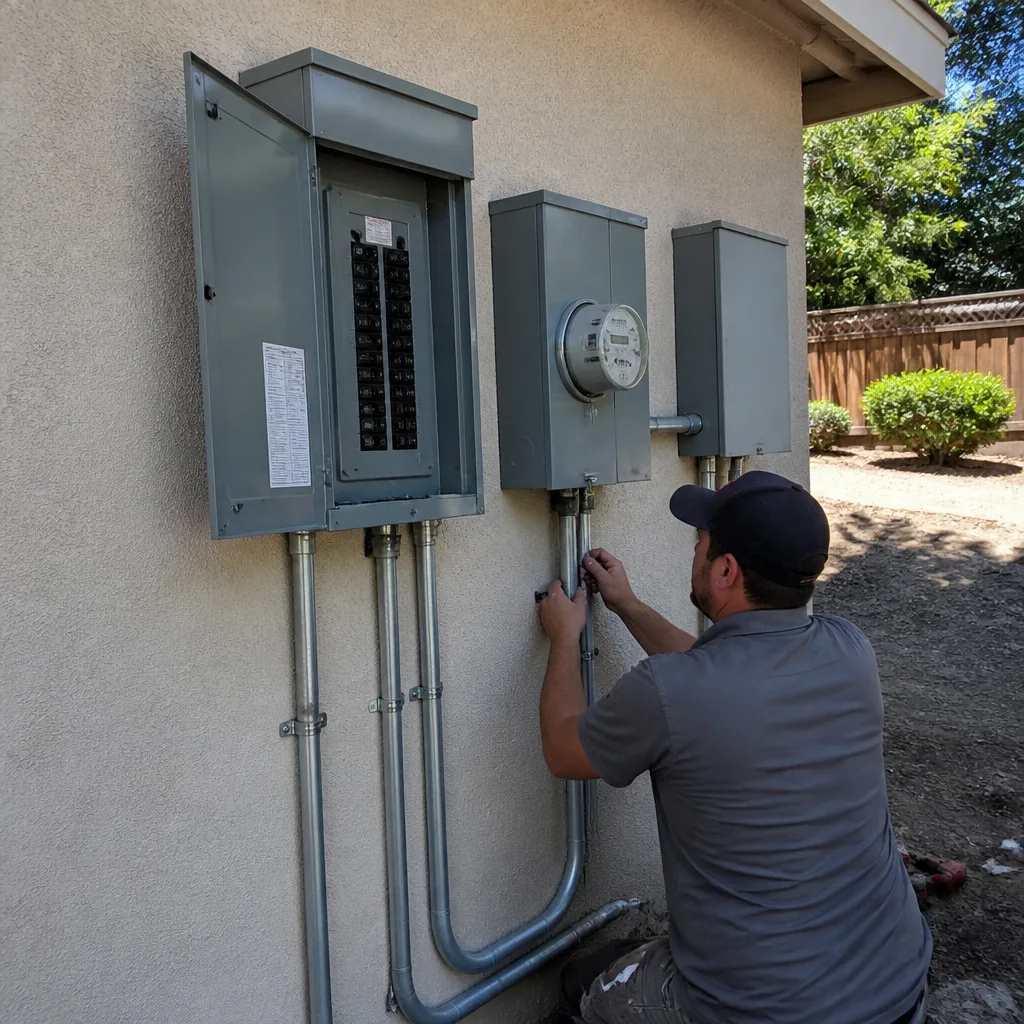
See the difference
 Before
 After
After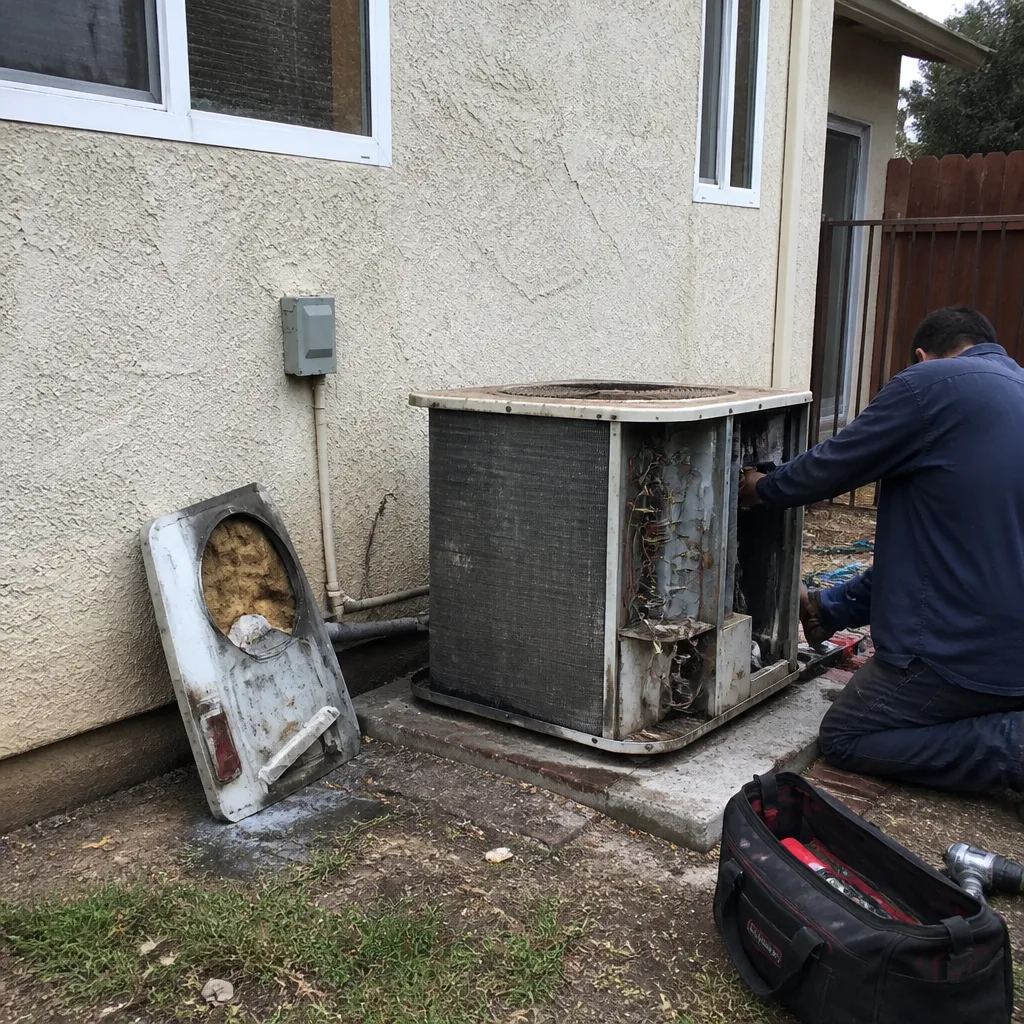 Before
 After
After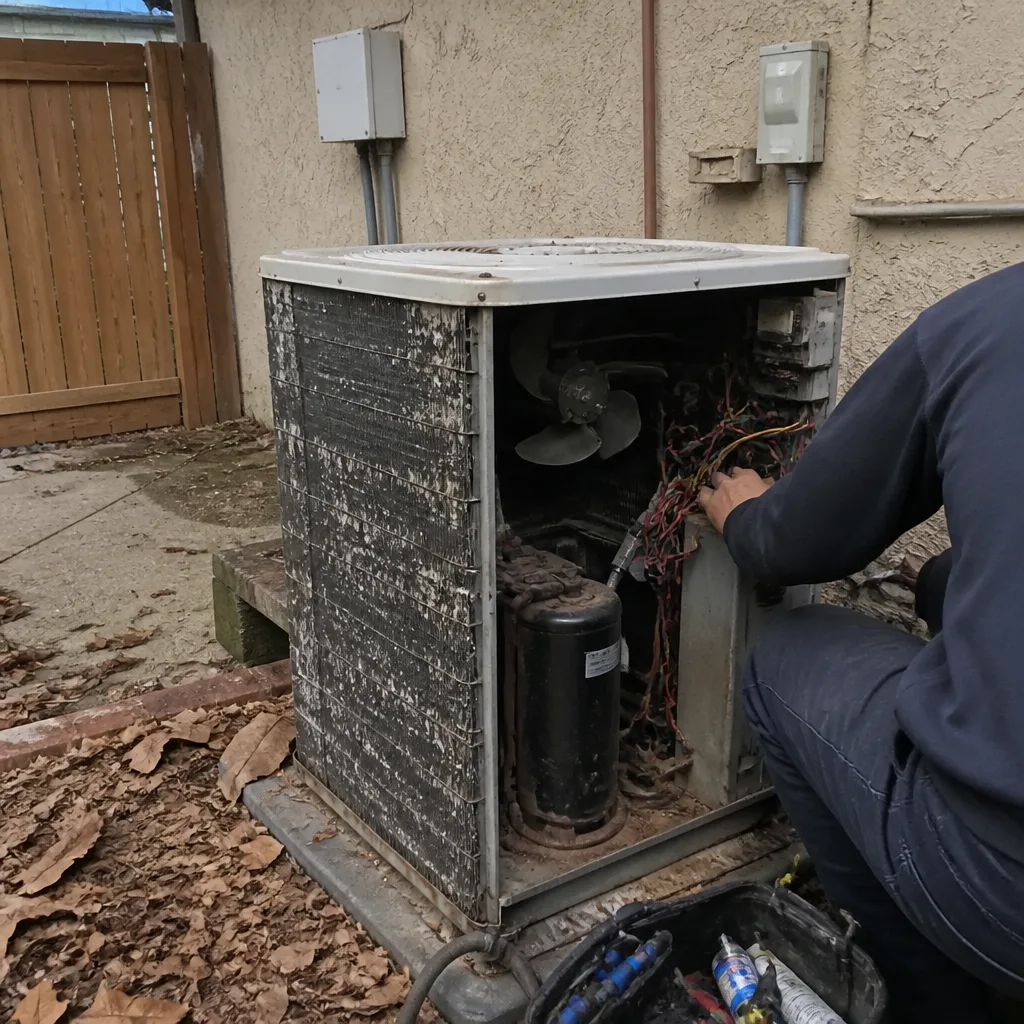 Before
 After
AfterReplacement Cost & What’s Included

For Thousand Oaks, a single-part CGI roofing repair generally lands between $400 and $1,800 installed. A straightforward flashing replacement or a few-tile swap runs $400 to $900. A ridge cap section replacement or a valley flashing rebuild runs $900 to $1,500. If the underlayment under the failed tile has rotted and needs a section cut out and replaced, you’re looking at $1,200 to $1,800 depending on how far the rot traveled. If the damage was caused by a larger roofing system failure needing broader attention, roof repair work in Thousand Oaks can reach $2,500, and a full roof replacement runs $8,000 to $20,000, but that’s the outlier, not the norm for a parts failure.
Every price we give includes the part, the labor, the disposal of the failed material, and written confirmation of what we replaced. As part of the Threshold Group family of home-service companies, Mason Remodeling Co Thousand Oaks delivers a written price before any work starts, and that price doesn’t move unless you ask us to add scope. Our workmanship on roofing repairs is covered by the 365-Day Done Right Promise: if the repair isn’t right within a year of completion, we come back and make it right at no cost to you.
DIY or Call Us?
Here’s the honest version. You can safely check the ground around your home for displaced tiles, look at your gutters for chip buildup, and visually inspect your flashing from ground level with binoculars. That’s useful information and we’ll take it over the phone. What you should not do is climb a ladder and walk a CGI tile roof. Tile roofing is a high-tension, high-consequence environment: tiles crack under concentrated weight, the surface is slick with morning dew or pollen in the Thousand Oaks hills, and a fall from a second-story eave is a life-changing injury, not a sprain. Tile roofing also concentrates weight in a way that’s different from asphalt shingle, and the wrong footing can crack three tiles before you even reach the problem area. Even the simplest tile swap needs the right profile match, the right under-tile fastener, and the right sealant. If you’re asking whether you can do it yourself, the realistic answer is that the cost of getting it wrong is higher than the repair itself. Call us at (805) 309-3386 and we’ll quote it over the phone, free.
FAQs

A correctly installed CGI concrete or clay tile roof in Thousand Oaks should last 40 to 60 years for the tile itself, while the underlayment typically needs replacement at the 20 to 30 year mark. Our local climate speeds that up on south-facing slopes because the UV exposure breaks down the underlayment’s asphalt impregnation faster than on shaded north slopes. If your roof is approaching that age and you’re seeing multiple small failures, the realistic conversation is about re-underlayment, not just patching. Call (805) 309-3386 and we’ll tell you honestly which situation you’re in.
No, a cracked tile cannot be repaired in place and should be replaced. Adhesives and sealers don’t restore the structural interlock of the tile’s channel, and in Thousand Oaks’s wet-dry cycles, a patched crack will reopen within a season or two. The good news is that a single tile replacement is usually the cheapest repair category we handle. Call (805) 309-3386 for an exact quote on your tile profile.
Most single-part replacements, whether it’s a flashing section, a few tiles, or a ridge cap run, take two to four hours on site. This assumes the underlayment beneath the part is still intact. If we find rot or a larger system issue once the tile is lifted, we’ll stop, show you what we found, and give you a written price for the additional scope before we do anything else. You’ll know the full picture before you’re asked to spend a dollar more.
We keep common CGI-compatible tile profiles, flashing, fasteners, sealants, and ridge components on our trucks, so for the failures we see most in Thousand Oaks, we can typically complete the repair in one visit. For less common color blends or specialized profiles, we source from local roofing suppliers in Ventura County, and we’ll tell you the lead time before you agree to anything. We also work with specification-grade material partners like GAF, CertainTeed, and Owens Corning, plus cabinet and surface lines like KraftMaid, Cambria, and Silestone when we’re handling a broader remodel that includes roofing scope.
Written by Isaac Pruett, Owner, Mason Remodeling Co – Thousand Oaks, CA at Mason Remodeling Co Thousand Oaks, serving Thousand Oaks and nearby areas.