Free written scope consultation - allowances, timeline, and change-order rules on paper before a single trade is scheduled
Cambria Kitchen Remodeling: The Thousand Oaks Owner’s Guide
Cambria kitchen remodeling in Thousand Oaks typically runs $14,000 to $45,000 installed, with countertop replacement alone landing between $2,000 and $6,500 depending on square footage and edge profile. We complete most Cambria-specific kitchen projects in 2 to 6 weeks depending on scope, and we carry the common Cambria edge profiles, sink cutouts, and seam kits in our Thousand Oaks shop. Most homeowners reach out to us after a chip, a failing seam, or a cracked slab around the sink starts catching water, food, and attention every single day.
What usually brings the call is pretty specific: a seam that’s opened up near the cooktop, a chip along the front edge from a dropped pan, or mineral staining that’s etched into the matte finish and won’t come back out. Maybe the sink reveal is showing its age. Maybe the waterfall edge is pulling away from the cabinet. Whatever the trigger, you want to know three things: what it’ll cost, whether the slab can be saved, and who’s actually going to do the work. We’ll cover all three below.
Which Cambria Models This Applies To
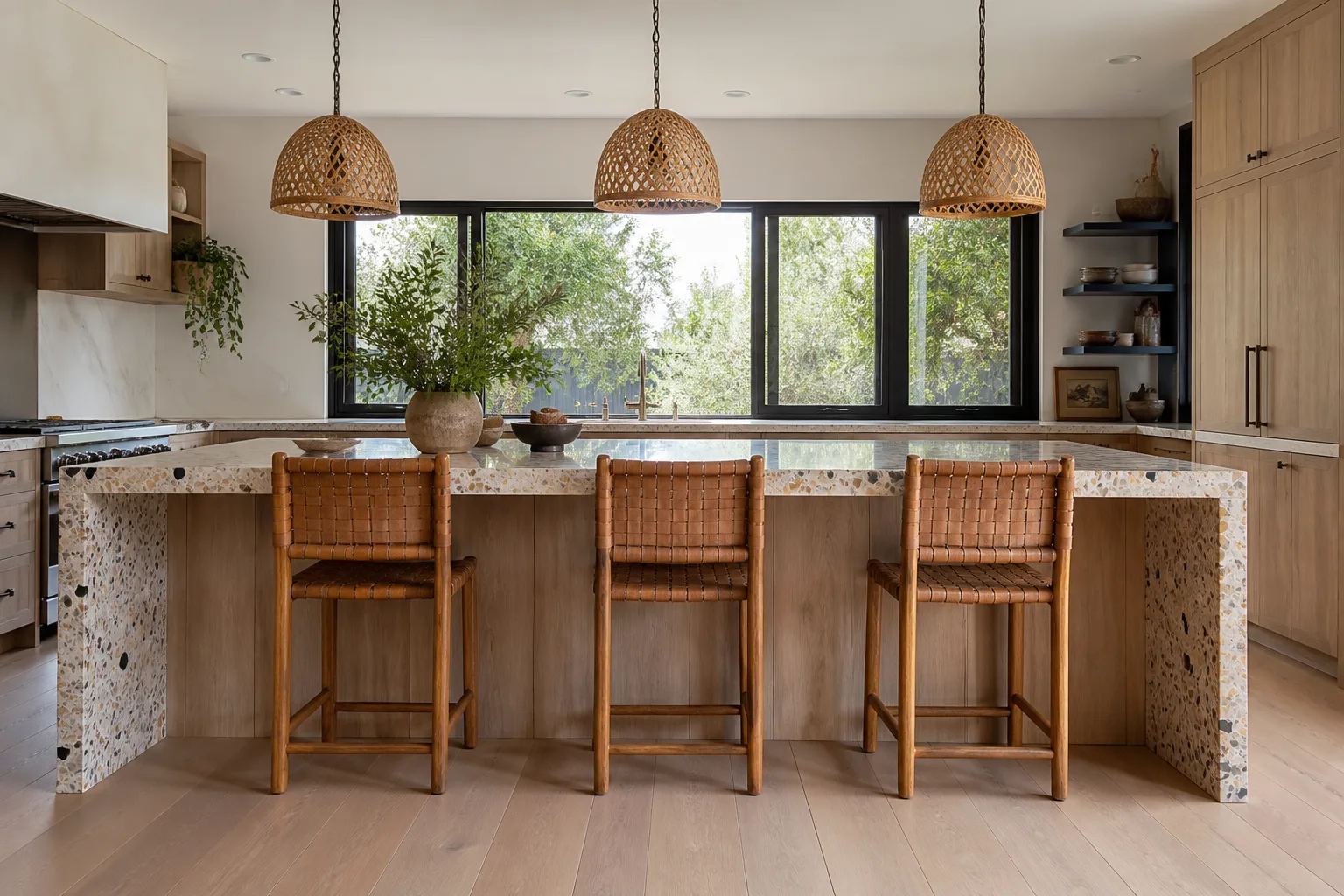
Cambria isn’t sold in numbered “models” the way cabinets or faucets are. Every slab is a named design: Brittanicca, Torquay, Summerhill, Portrush, Skara Brae, and a few hundred others. The part that matters for your kitchen isn’t the design name, it’s the fabrication profile: the edge style, the slab thickness (1cm, 2cm, or 3cm), the sink cutout style, and the seam placement. If you have the original Cambria order paperwork or the fabrication drawing from your builder, that’s the fastest route to matching a replacement piece. No paperwork? Flip the slab and check the underside near a corner. Cambria etches a small production stamp into the underside of most slabs. That stamp tells us the design name and production batch, which we use to match a new piece to the existing stone on color and pattern density.
On the OEM-versus-aftermarket question for Cambria specifically: there’s no such thing as a “generic Cambria slab.” You buy the genuine Cambria design or you don’t. What does vary is everything around the slab: the sealer (Cambria doesn’t require sealing, but fabricators sometimes use an enhancer for a richer color), the sink and faucet cutouts, the radius on inside corners, and the adhesive system at the seams. Those are where we see installers cut corners and those are the parts that fail first. We use manufacturer-specified color-matched seam adhesive and mechanically supported overhangs, not just glue.
One Thousand Oaks-specific reality: our water is hard. Cambria handles it better than granite or marble because it’s non-porous, but hard water still builds up a mineral film that dulls the reflective quality of polished finishes. If you have a high-gloss finish like White Cliff or Brittanicca Gold, you’ll notice the film faster than on a matte design.
Styles & brands we work with
Signs Your Cambria Kitchen Remodeling Is Failing
- A seam that’s visibly opening or catching a fingernail. In Thousand Oaks kitchens, this usually traces back to inadequate support underneath: a seam placed over a dishwasher opening without a support rail, or a slab flattened with too much shim pressure at install. Once a seam flexes, it won’t re-bond on its own.
- Chipping along the front edge or around an undermount sink. Cambria is tough but not indestructible. A dropped stock pot or a slammed cabinet door against the counter edge can pop a chip, especially on pencil-thin edges. Sink cutouts are the second most common chip zone because cutting boards get dragged across them.
- A dull gray film that won’t come off with a normal cleaning. In Ventura County’s hard water, calcium and magnesium build up over months and settle into the micro-texture of polished surfaces. Homeowners scrub, the film stays, and they assume the stone is ruined. It’s usually a restoration job, not a replacement.
- The waterfall edge or extended overhang has started to drift. When a vertical panel is glued rather than mechanically attached, seasonal expansion and contraction in Thousand Oaks (we get hot inland summers and cooler fall nights) can break that glue line over 3 to 5 years. You’ll see a visible gap at the floor or at the joint where vertical meets horizontal.
- Cracks radiating from the sink corners. This is the most serious sign because it usually means the sink cutout corners were radiused too tight at fabrication, or the counter wasn’t level and water has been pooling and weakening the area over time. A crack at a tight inside corner is a structural problem, not a cosmetic one.
See the difference
 Before
 After
After Before
 After
After Before
 After
AfterReplacement Cost & What’s Included
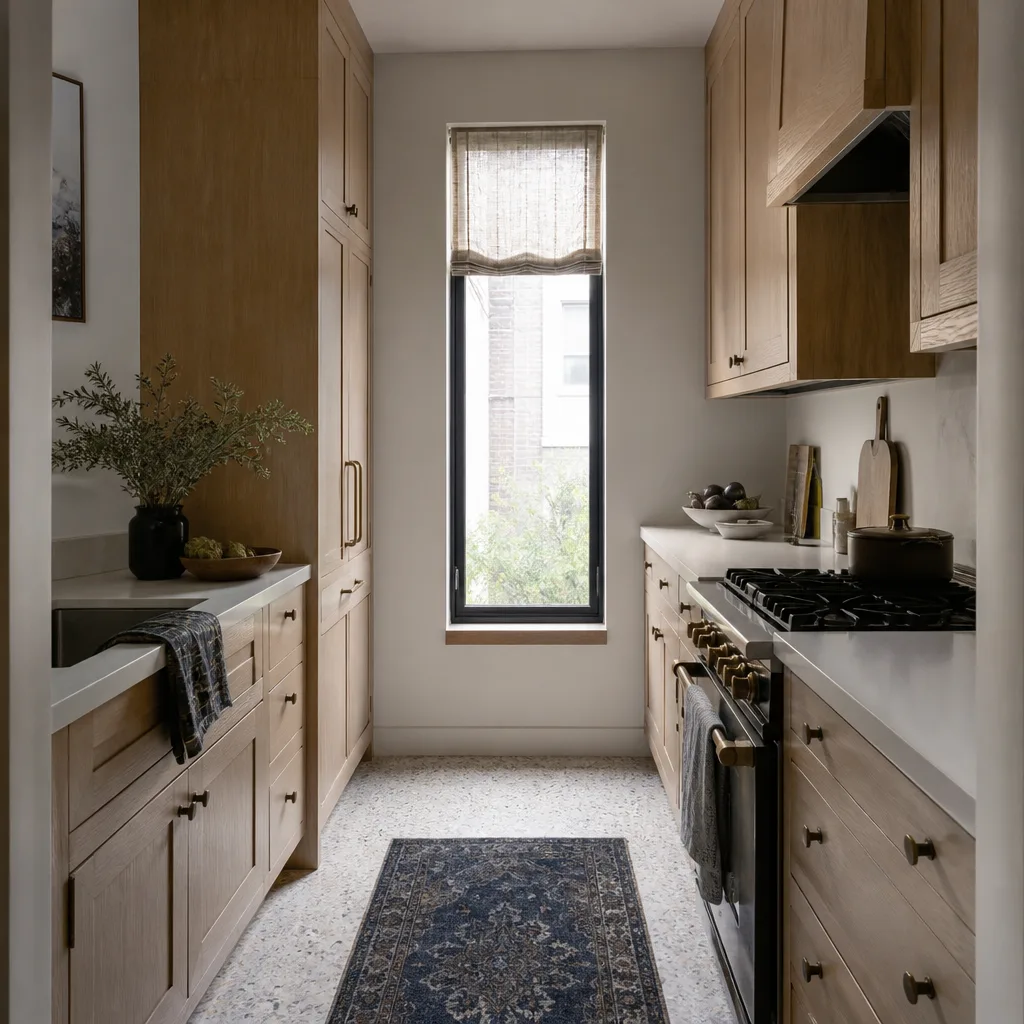
A full Cambria kitchen remodel in Thousand Oaks typically runs $14,000 to $45,000 installed. A countertop-only replacement lands between $2,000 and $6,500 depending on slab size, edge profile, and whether you’re doing a standard or complex sink cutout. Backsplash runs $800 to $2,500. If you’re adding a kitchen island at the same time, budget $3,000 to $10,000 for the island build including Cambria on top.
What drives the range the most is slab selection: entry Cambria designs run closer to the lower end, while larger slabs with dramatic veining (and more seam work) push toward the top. Edge profile matters too. A simple eased edge is the most affordable; a mitered waterfall edge adds labor at $35 to $60 per linear foot in this market.
Every price we give is a written line-item quote. Not a verbal estimate that grows on the final bill. You’ll see the slab cost, fabrication, demolition and hauling of the old top, sink and faucet reinstallation, and the labor hours – all before we start. And if the work isn’t right within 365 days of completion, we make it right at no cost to you. That’s our Done Right Promise, in writing.
DIY or Call Us?
Here’s the honest split. You can absolutely DIY the diagnosis: take photos of the seam, chip, or stain in good light, run a fingernail along suspect seams to feel for movement, and check under the sink cabinet to see whether the slab is resting on a support rail or floating over the opening. That information helps us quote accurately, and sometimes helps us tell you over the phone that a restoration will do the job for a few hundred dollars instead of a few thousand.
What you shouldn’t DIY is moving, lifting, or regluing a Cambria slab. A 3cm slab weighs roughly 18 pounds per square foot. A standard 30-square-foot island top is over 500 pounds. Undersupported slabs flex, and when they flex, they crack – sometimes instantly, sometimes silently while you sleep. Seam repair requires color-matched polyurethane adhesive mixed to the exact tint of your slab, applied under controlled clamping pressure, then polished flat to within thousandths of an inch. That’s not a Saturday project with a tube from the home center. Call us at (805) 309-3386 and tell us what you’re seeing. We’ll tell you what it costs and how long it takes – then we’ll do exactly that.
FAQs
Cambria countertops routinely last 20 to 30 years in Thousand Oaks homes with no structural failure, but the parts around them – seams, sink mounts, and support rails – typically need professional attention at the 8-to-12-year mark. Hard water here shortens the time between polish restorations on high-gloss finishes. If your slab is more than 10 years old and showing seam separation, the stone is usually fine; the fabrication details around it are what need work. Call (805) 309-3386 and we’ll tell you which one you’re dealing with.
Chips under 1 inch along a front edge can usually be repaired with color-matched resin in a single visit, and the fix is often nearly invisible on busy designs. Cracks running through the slab plane – especially at sink corners – generally cannot be reliably repaired because Cambria is a dense quartz material; once the stone fractures, the crack can travel unpredictably. A restoration specialist (that’s us) should look at it in person before anyone spends money. Estimates are free.
A countertop-only replacement typically takes 2 to 3 weeks from template to install; a full kitchen remodel with island work runs 4 to 8 weeks depending on cabinetry lead times and whether you’re doing backsplash, plumbing, or electrical changes in the same pass. The Cambria slab itself usually needs 7 to 10 days from order to fabrication, so the countertop rarely drives the schedule. Call (805) 309-3386 for a realistic timeline on your scope.
We handle the slab purchase through our Cambria account, which means you get wholesale pricing and we coordinate the template, fabrication, and install as one job, in one schedule, with one written price. We don’t stock full slabs in the Thousand Oaks shop – nobody does – but we do keep common seam kits, undermount sink brackets, support rails, and color-matched adhesive in stock for faster repairs. On a full replacement, we order your exact design and have it fabricated to spec in about a week to ten days.
Written by Isaac Pruett, Owner, Mason Remodeling Co – Thousand Oaks, CA at Mason Remodeling Co Thousand Oaks, serving Thousand Oaks and nearby areas.